

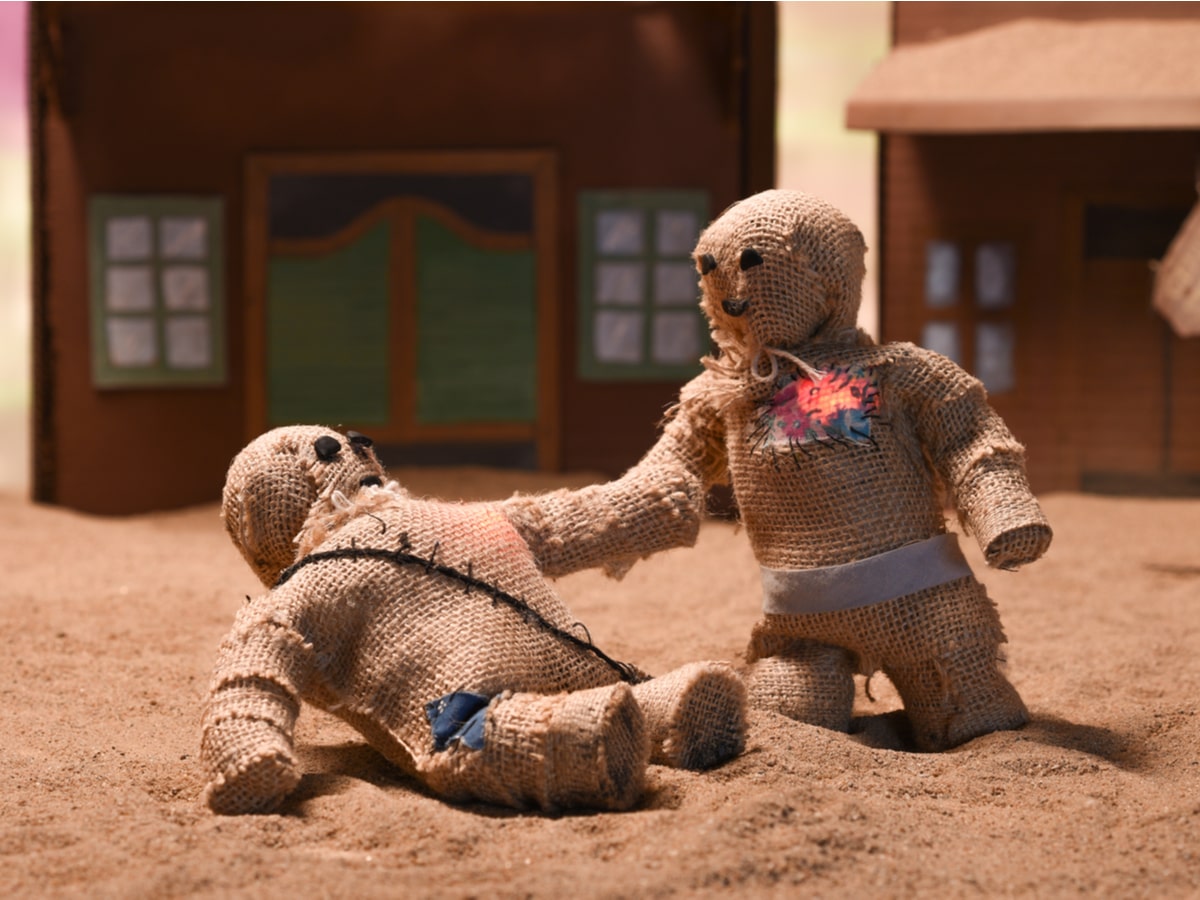
What Is Stop Motion Animation? Types, History & How It Works
Stop motion animation is a filmmaking technique in which real objects are moved in tiny steps and photographed one frame at a time. When the frames are played back in sequence, usually at 12 or 24 frames per second, the objects appear to move on their own. Claymation, puppet animation, cut-out animation and pixilation are all types of stop motion.
It is one of the oldest animation techniques, and still one of the most loved, because you can see the handmade craft in every frame. Below we explain how stop motion works, the main types, how it differs from claymation and other animation, its history from the 1890s to today’s Oscar winners, and how to make your own.
How stop motion animation works
Film and video are a series of still images shown quickly, one after another. Show them fast enough and the brain reads the small differences between them as smooth movement. Stop motion uses that effect with physical things: instead of drawing each frame, the animator moves a real object slightly, takes a photo, moves it again and takes another. The number of images shown each second is the frame rate.
The basic process is the same whatever you animate:
- Plan the shot. Write the action and sketch a simple storyboard so you know what moves, and when.
- Build the set and characters. Models, puppets, clay figures, paper cut-outs or everyday objects.
- Fix the camera and the lights. The camera must not move and the light must not change between frames, or the film will flicker and jump.
- Move and shoot. Move the object a small amount, take one frame, and repeat. Smaller moves give slower, smoother motion.
- Check as you go. Most stop-motion software shows a faint copy of the previous frame over the live view, called onion skinning, so you can judge each move.
- Play back and finish. Sequence the frames at your chosen frame rate, then add music, voices and sound effects.
How many photos you need depends on the frame rate. Many stop-motion films hold each pose for two frames of a 24-frame film, called shooting “on twos”:
| Running time | Poses at 12 per second (on twos) | Poses at 24 per second (on ones) |
| 1 second | 12 | 24 |
| 10 seconds | 120 | 240 |
| 1 minute | 720 | 1,440 |
| 90-minute feature | 64,800 | 129,600 |
This short tutorial shows the whole process in practice, from set-up to playback:
Types of stop motion animation
Stop motion is an umbrella term. What changes from one type to the next is the material being moved:
| Type | What is moved | Well-known examples |
| Object animation | Everyday objects: toys, food, furniture, stationery | Adverts and music videos built from household items |
| Claymation | Clay or plasticine figures, often over a wire armature | Gumby, Wallace & Gromit, Chicken Run |
| Puppet animation | Jointed puppets with metal armatures and swappable faces | The Nightmare Before Christmas, Coraline, Kubo and the Two Strings |
| Cut-out animation | Flat paper or card figures with hinged joints | Early Monty Python animations, the original South Park pilot |
| Silhouette animation | Black cut-outs lit from behind | Lotte Reiniger’s The Adventures of Prince Achmed (1926) |
| Pixilation | Live actors, posed and photographed frame by frame | Norman McLaren’s Neighbours (1952) |
| Brickfilm | Building-brick figures such as LEGO | Fan films on YouTube; The Lego Movie imitated the look in CGI |
| Sand and powder animation | Sand, salt or other powders on a lightbox | Caroline Leaf’s films, Co Hoedeman’s The Sand Castle |
| Model and creature animation | Detailed models combined with live-action footage | King Kong (1933), Ray Harryhausen’s Jason and the Argonauts (1963) |
Silhouette animation was pioneered by Lotte Reiniger, whose cut-out figures were made from black card and thin lead, with every limb joined by wire hinges. For a wider look at techniques beyond stop motion, see our guide to animation styles.
Stop motion vs claymation: what’s the difference?
Claymation is a type of stop motion, so every claymation film is stop motion, but not every stop-motion film is claymation. “Stop motion” describes the method: move, photograph, repeat. “Claymation” describes the material: clay or plasticine.
| Stop motion | Claymation | |
| What it means | Any animation made by moving real objects frame by frame | Stop motion made with clay or plasticine figures |
| Materials | Puppets, clay, paper, objects, people, sand and more | Clay or plasticine, usually over a wire armature |
| Examples | The Nightmare Before Christmas, Coraline, Neighbours | Wallace & Gromit, Chicken Run, Gumby |
| Typical challenge | Keeping every move small and consistent | Fingerprints, dust and soft clay changing shape between frames |
Our full guide to claymation covers how clay films are made and the famous studios behind them.
A short history of stop motion
- 1898: The Humpty Dumpty Circus by J. Stuart Blackton and Albert E. Smith is often cited as one of the first stop-motion films.
- 1933: Willis O’Brien’s stop-motion effects bring the giant ape to life in King Kong.
- 1940s: George Pal’s Puppetoons use replacement animation, swapping in a separately carved figure for each pose.
- 1950s: Art Clokey creates Gumby, one of television’s first clay characters.
- 1963: Ray Harryhausen’s sword-fighting skeletons in Jason and the Argonauts become one of cinema’s most famous effects scenes.
- 1989: Aardman’s Wallace & Gromit appear for the first time in A Grand Day Out.
- 1993: The Nightmare Before Christmas, directed by Henry Selick, shows what feature-length puppet animation can do.
- 2000: Aardman’s Chicken Run, often cited as the highest-grossing stop-motion animated film.
- 2006: Wallace & Gromit: The Curse of the Were-Rabbit wins the Academy Award for Best Animated Feature.
- 2009: Coraline, the first feature from the Oregon studio Laika.
- 2023: Guillermo del Toro’s Pinocchio wins the Academy Award for Best Animated Feature.
- Today: Studios shoot on digital cameras with frame-capture software such as Dragonframe, often adding digital effects, while phone apps let anyone try the technique at home.
The Wikipedia history of stop motion goes into much more detail on the early pioneers.
Case study: The Nightmare Before Christmas
Tim Burton’s The Nightmare Before Christmas (1993) is the classic example of how much work stop motion takes. The film runs about 76 minutes. Shot at 24 frames per second, that is more than 109,000 frames, every one of them posed by hand.
- Replacement heads. Jack Skellington’s expressions came from a large set of swappable heads, reported to number around 400, rather than one movable face.
- Slow going. One minute of finished film was reported to take about a week to shoot, so production ran on many sets at once.
- Small details. Blinks and lip movements were built from tiny replacement parts, swapped frame by frame.
The same replacement technique is still used today, though studios such as Laika now 3D-print faces rather than sculpt each one by hand.
Stop motion vs 2D and 3D animation
| Stop motion | 2D animation | 3D (CGI) animation | |
| How it is made | Real objects moved and photographed frame by frame | Drawn frames or digital 2D rigs | Digital models animated and rendered |
| Look | Tactile and handmade, with real light and texture | Flat, graphic, any style | Anything from realistic to stylised |
| Changing a scene later | Hard: the scene is reshot | Moderate: redraw or re-rig | Easier: adjust and re-render |
| Best for | Craft-led stories, ads and music videos | Explainers, series, character stories | Products, technical detail, features |
Some films blend them: CGI can be made to look like stop motion, and stop-motion films often use digital clean-up and effects. Our guides to 3D animation production and cel animation cover the other two in more depth.
How to make a stop motion animation at home
You can start with a phone and whatever is on your desk. You need:
- A camera. A phone is fine. Fix it to a tripod or tape it down so it cannot move.
- A stop-motion app. Look for onion skinning, which overlays the last frame, and a way to lock focus and exposure. Professionals use Dragonframe.
- Steady light. Close the curtains and use lamps. Daylight changes from minute to minute and shows up as flicker.
- Something to animate. Clay, toys, paper cut-outs or household objects. Blu-tack holds things in place between moves.
Then try a first exercise:
- Pick one simple action, such as a ball rolling across the table and bouncing off a book.
- Mark the start and end points, and plan roughly 12 moves for each second you want on screen.
- Move the ball a little, take a frame, and repeat. Make the moves smaller as it slows down and larger as it speeds up.
- Play it back at 12 frames per second. If it looks jerky, add more, smaller moves; if it looks slow, take some out.
- Add a sound effect and some music, then export. Our walk cycle guide is a good next step once you want to animate a character.
Stop motion in marketing and brand videos
Stop motion stands out in a feed full of polished CGI and stock footage. Its handmade look signals care and craft, which is why it turns up in food, fashion, toy and charity campaigns and in social videos that need to stop the scroll.
The trade-off is flexibility. Because every frame is shot physically, late script changes mean reshooting, and longer films get expensive quickly. There are three practical ways to get the look in a business video:
| Option | How it is made | Best for |
| Real stop motion | Objects or puppets shot frame by frame | Short ads and social films where craft is the message |
| Digital stop-motion look | 2D or 3D animation with stepped timing and handmade textures | Longer films that may need changes later |
| Hybrid | Real props or textures combined with digital animation | Product stories that need both warmth and clarity |
Our studio works mainly in 2D and 3D animation, including handmade-looking styles. Our 2026 showreel shows the range, and you can see more on our portfolio:
If you want a tactile, hand-crafted feel for an explainer, we can talk through the options as part of our explainer video production process.
FAQ
What is stop motion animation?
A technique where real objects are moved in small steps and photographed one frame at a time. Played back at speed, usually 12 or 24 frames per second, the frames create the illusion that the objects are moving by themselves.
Is claymation stop motion?
Yes. Claymation is a type of stop motion that uses clay or plasticine figures. Stop motion is the wider term and also covers puppets, paper cut-outs, objects, sand and live actors.
How many frames per second is stop motion?
Usually 12 or 24. Many films are shot “on twos”, with each pose held for two frames of a 24-frame film, so 12 different poses a second. Smooth, detailed work is shot “on ones”, with 24 poses a second.
What was the first stop motion film?
The Humpty Dumpty Circus (1898) is often cited as one of the first. It was made by J. Stuart Blackton and Albert E. Smith using toy acrobats and animals. Other early filmmakers experimented with the trick at around the same time.
What is the most famous stop motion film?
The Nightmare Before Christmas, Wallace & Gromit and Chicken Run are among the best known. Chicken Run is often cited as the highest-grossing stop-motion film, and Wallace & Gromit: The Curse of the Were-Rabbit and Guillermo del Toro’s Pinocchio both won the Academy Award for Best Animated Feature.
How long does stop motion take?
A long time, because every frame is posed by hand. At 12 poses a second, one minute needs 720 separate poses. A simple home clip can be shot in an afternoon; professional films take weeks per minute of screen time, and features take years.
What do I need to make stop motion at home?
A phone or camera, a way to hold it still, steady lighting and a stop-motion app. An app with onion skinning makes small, even moves much easier. Then use clay, toys, paper or household objects as your characters.
What is pixilation in stop motion?
Stop motion with real people. Actors hold a pose for each frame and move slightly between shots, so they appear to glide, slide or move in impossible ways. Norman McLaren’s Neighbours (1952) is a famous example.
Is stop motion 2D or 3D?
It can be either. Cut-out and silhouette animation are flat, 2D forms of stop motion, while claymation and puppet animation use 3D models on miniature sets.
Is stop motion still used today?
Yes. Studios such as Aardman and Laika still make stop-motion features, and the style is popular in adverts, music videos and social media, where its handmade look stands out.

What is stop motion animation?
A technique where real objects are moved in small steps and photographed one frame at a time. Played back at speed, usually 12 or 24 frames per second, the frames create the illusion that the objects are moving by themselves.
Is claymation stop motion?
Yes. Claymation is a type of stop motion that uses clay or plasticine figures. Stop motion is the wider term and also covers puppets, paper cut-outs, objects, sand and live actors.
How many frames per second is stop motion?
Usually 12 or 24. Many films are shot “on twos”, with each pose held for two frames of a 24-frame film, so 12 different poses a second. Smooth, detailed work is shot “on ones”, with 24 poses a second.
What was the first stop motion film?
The Humpty Dumpty Circus (1898) is often cited as one of the first. It was made by J. Stuart Blackton and Albert E. Smith using toy acrobats and animals. Other early filmmakers experimented with the trick at around the same time.
What is the most famous stop motion film?
The Nightmare Before Christmas, Wallace & Gromit and Chicken Run are among the best known. Chicken Run is often cited as the highest-grossing stop-motion film, and Wallace & Gromit: The Curse of the Were-Rabbit and Guillermo del Toro’s Pinocchio both won the Academy Award for Best Animated Feature.
How long does stop motion take?
A long time, because every frame is posed by hand. At 12 poses a second, one minute needs 720 separate poses. A simple home clip can be shot in an afternoon; professional films take weeks per minute of screen time, and features take years.
What do I need to make stop motion at home?
A phone or camera, a way to hold it still, steady lighting and a stop-motion app. An app with onion skinning makes small, even moves much easier. Then use clay, toys, paper or household objects as your characters.
What is pixilation in stop motion?
Stop motion with real people. Actors hold a pose for each frame and move slightly between shots, so they appear to glide, slide or move in impossible ways. Norman McLaren’s Neighbours (1952) is a famous example.
Is stop motion 2D or 3D?
It can be either. Cut-out and silhouette animation are flat, 2D forms of stop motion, while claymation and puppet animation use 3D models on miniature sets.
Is stop motion still used today?
Yes. Studios such as Aardman and Laika still make stop-motion features, and the style is popular in adverts, music videos and social media, where its handmade look stands out.